The Future of Autonomous Auditing
The future of quarry and crusher management will not arrive with noise.
It will not begin with machines suddenly replacing people or software making dramatic decisions without human judgment. It will not look like the exaggerated future promised in technology advertisements, where every problem disappears because a system has been labeled intelligent.
The real future will be quieter.
It will appear first in small moments.
A camera confirming what the weighbridge recorded. A sensor noticing that a machine is behaving differently from its usual pattern. A system recognizing that a truck has remained idle longer than expected. A maintenance alert appearing before a breakdown becomes unavoidable. A transaction being preserved with enough evidence that no one needs to reconstruct it later from memory.
This is how meaningful technology usually enters serious industries. Not as spectacle, but as discipline.
The next chapter of quarry management is not automation for its own sake. It is autonomous auditing: the ability of a business system to observe, compare, verify, and alert without waiting for every question to be asked manually.
From Reactive Auditing to Early Awareness
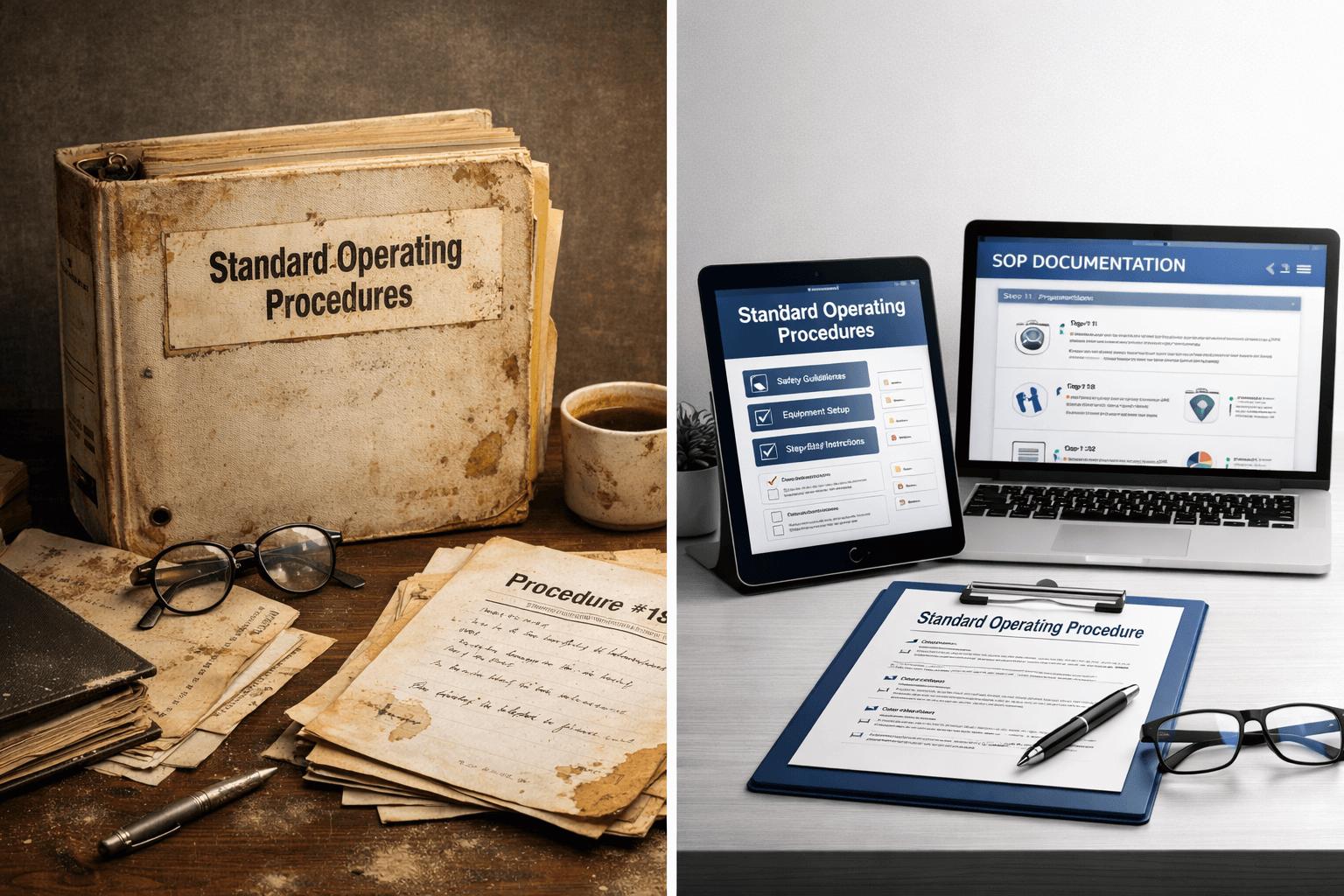
For decades, auditing was something that happened after the fact.
A report was reviewed. A ledger was checked. A weighment was questioned. A discrepancy was investigated. A supervisor was asked to explain. A manager searched for supporting documents. People tried to understand what had happened by examining records that were often created hours, days, or weeks earlier.
This form of auditing remains important, but it has one natural weakness.
“The future of quarry management is not a system that controls everything. It is a system that notices what matters before uncertainty becomes expensive.”
— Super Administrator
It arrives late.
Late information can still be useful, but it rarely offers the same power as early awareness. Once a pattern has grown, once a mistake has repeated, once a delay has affected customers, or once a machine has already failed, the business has fewer options.
The purpose of future systems is not merely to produce better explanations after the damage is done. The purpose is to help businesses recognize unusual behaviour while there is still time to respond calmly.
Autonomous auditing begins with that simple idea.
The system should not only record the business. It should quietly help protect it.
Practical Role of Artificial Intelligence
Artificial intelligence is often discussed as though it were a single magical capability.
In industrial operations, its value is much more practical.
AI becomes useful when it can help compare what is expected with what is observed. It can assist in identifying unusual patterns, detecting mismatches, organizing evidence, reading visual context, and drawing attention to events that deserve human review.
It does not need to replace experienced managers to be valuable. It only needs to help them see what might otherwise remain hidden inside thousands of ordinary transactions.
A quarry generates enormous operational repetition. Trucks enter. Trucks leave. Machines run. Materials move. Invoices are created. Payments are followed up. Routes are completed. Fuel is consumed. Maintenance events occur.
Most of these events are normal. The difficulty lies in recognizing the few that are not.
That is where intelligent systems can help. Not by declaring certainty where none exists, but by asking better questions earlier.
IoT and the Physical World
IoT sensors add another layer to this future.
A sensor is not impressive because it is small or connected. It is valuable because it allows a physical condition to become part of the business conversation.
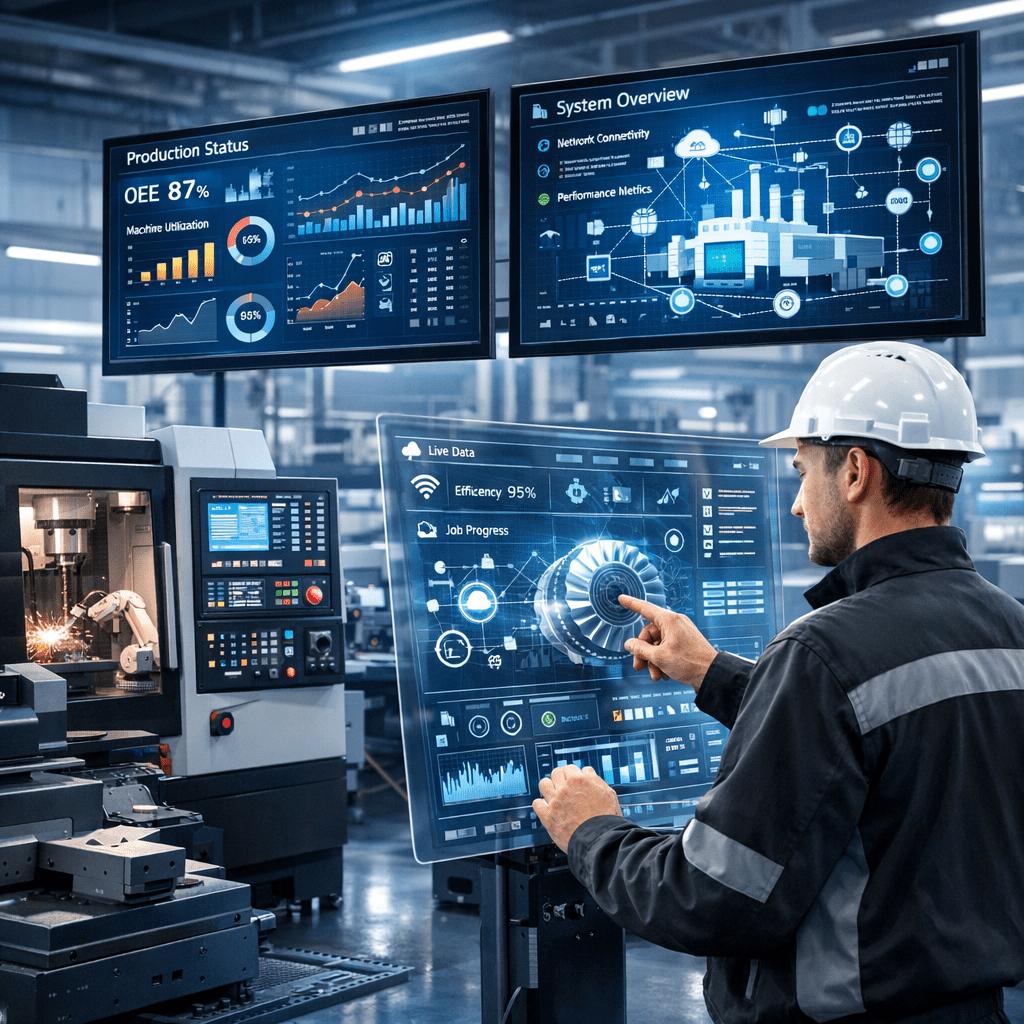
Temperature, vibration, fuel levels, engine hours, electrical status, movement, location, pressure, and equipment utilization can all become signals that help the organization understand what is happening without waiting for manual reporting.
The quarry remains a world of stone, steel, diesel, heat, dust, and mechanical force.
IoT does not make that world less physical.
It makes the physical world more readable.
A machine that once failed without warning can begin showing signs of stress. A vehicle that once disappeared between departure and arrival can remain visible throughout its route. A weighbridge that once depended entirely on manual observation can become part of a self-verifying transaction.
This is not technology replacing reality.
It is reality becoming more measurable.
The Role of Cameras
Cameras will play an especially important role in the future of industrial trust.
For a long time, cameras were viewed mainly as security devices. They were installed to watch, record, and provide evidence after something went wrong.
That role still matters, but it is no longer sufficient.
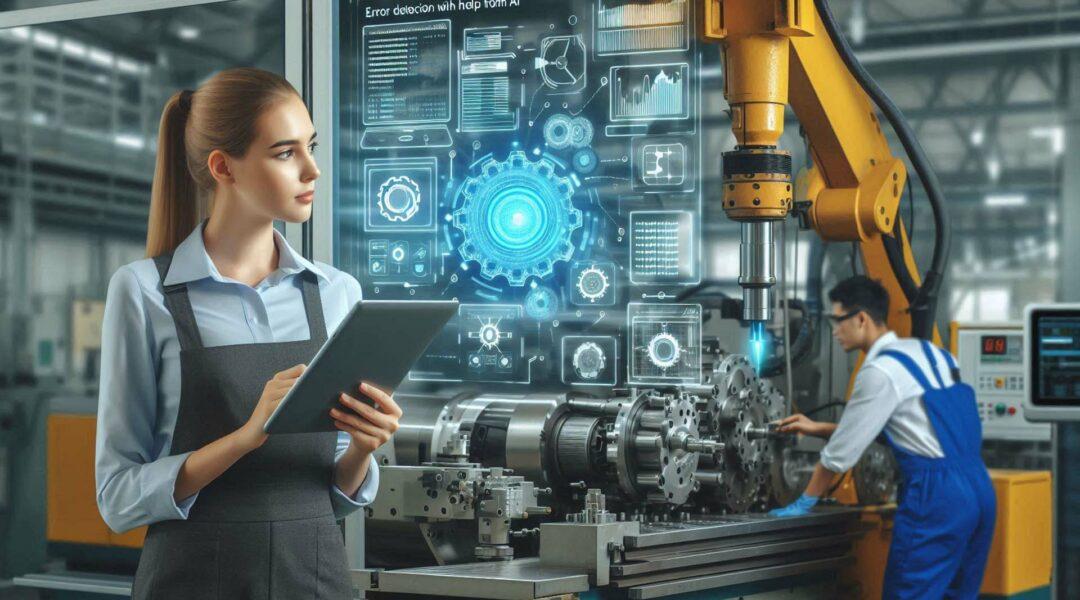
The next generation of industrial cameras will become operational witnesses.
At the weighbridge, a camera can help confirm the presence of the vehicle, the position of the truck, the load condition, and the surrounding context of a transaction.
Near a stockyard, it can help create visual evidence of material movement. At entry and exit points, it can strengthen vehicle identification.
Across critical zones, it can help verify whether operational events align with recorded data.
Most images will simply become part of the trusted history of the business.
Anomaly Detection
Automatic anomaly detection is perhaps the most important phrase in this future.
An anomaly is not automatically a violation. It is simply something that differs from expectation.
A truck taking an unusual route may have a valid reason. A vehicle idling for a long time may be waiting at a customer site. Fuel consumption may rise because the route changed. A production slowdown may be caused by planned maintenance.
Good systems should not accuse. They should notice.
The purpose of anomaly detection is not to create suspicion. Its purpose is to create attention.
Sometimes the result will be corrective action. Sometimes it will simply be confirmation that nothing is wrong.
Both outcomes are valuable because both reduce uncertainty.
Context Over Policing
The future of auditing will be less about policing and more about context.
A system may notice that a weighment differs from historical patterns. It may compare that transaction with images, vehicle history, customer order details, operator activity, and dispatch timing.
It may recognize that a machine’s fuel consumption no longer matches its output. It may connect idle time with route data, driver records, and customer delivery windows.
None of these observations removes human judgment. They make human judgment better informed.
Design Without Hype
This is why the future must be designed without hype.
Industrial businesses do not need technology that sounds impressive in a presentation but fails in real conditions.
They need systems that tolerate dust, heat, imperfect connectivity, human variation, and regulatory changes.
A quarry is not a laboratory. It is a demanding environment where every solution must earn its place.
The future belongs to systems that understand this humility.
Inside Modomines
Within Modomines, the future of autonomous auditing grows naturally from the same philosophy that shaped the platform from the beginning.
Trust should be supported by evidence, and evidence should be captured as close to reality as possible.
Silent Weight Capture created one layer of certainty. AI-assisted image verification added another. Change logs preserved history. Role-based access clarified responsibility. Mobile dashboards brought awareness closer to leadership.
Fleet visibility extended intelligence beyond the quarry gate. Maintenance and production data revealed how machines and material behaved over time.
The Evolution Toward Autonomous Auditing
Autonomous auditing is the next step in that same evolution.
It brings these signals together so that the system can begin recognizing relationships that may not be visible to any single department. A weighbridge event, an image, a driver, a route, a customer, a machine, a fuel pattern, a payment status, and a change log may appear separately inside a business.
The future lies in understanding how they speak to one another.
What the Future Promises
The promise is not that errors will disappear.
No serious business should make that claim.
The promise is that fewer errors will remain invisible. Fewer questions will depend entirely on memory. Fewer discrepancies will wait until month-end. Fewer machine problems will appear suddenly. Fewer operational decisions will be made from incomplete information.
The future is not perfect automation. It is earlier awareness. It is stronger verification. It is calmer leadership.
It is the quiet confidence that the business is no longer waiting for problems to announce themselves loudly.
The Role of People
A quarry will always need people.
It will need experienced owners who understand judgment. It will need supervisors who know the ground reality. It will need operators who respect machines. It will need mechanics who can hear trouble before instruments confirm it. It will need accountants who preserve financial clarity. It will need drivers who understand routes, roads, and responsibility.
Technology should not diminish any of these roles.
It should support them.
The most advanced quarry of the future will not be the one where people disappear from the operation. It will be the one where people are supported by systems that see continuously, remember accurately, verify independently, and alert intelligently.
The human enterprise remains.
The uncertainty around it begins to shrink.
The Quiet Future of Industrial Trust
Perhaps that is the quiet future of industrial trust.
Not a world where software runs the quarry alone.
A world where the quarry finally becomes understandable in real time.
Where machines speak before they fail.
Where cameras observe without interrupting.
Where sensors convert physical conditions into usable insight.
Where unusual patterns are noticed before they become costly habits.
Where every transaction carries its own evidence.
Where leadership moves from reaction to readiness.
And where owners no longer ask only what happened yesterday, but understand what is changing now.
That is not hype. It is simply the next logical step for businesses that can no longer afford to operate in the dark.
The future of industrial intelligence is not about creating systems that shout louder.
It is about creating systems that notice earlier.
Dialogue
0 CommentsNo comments yet. Share your thoughts above!