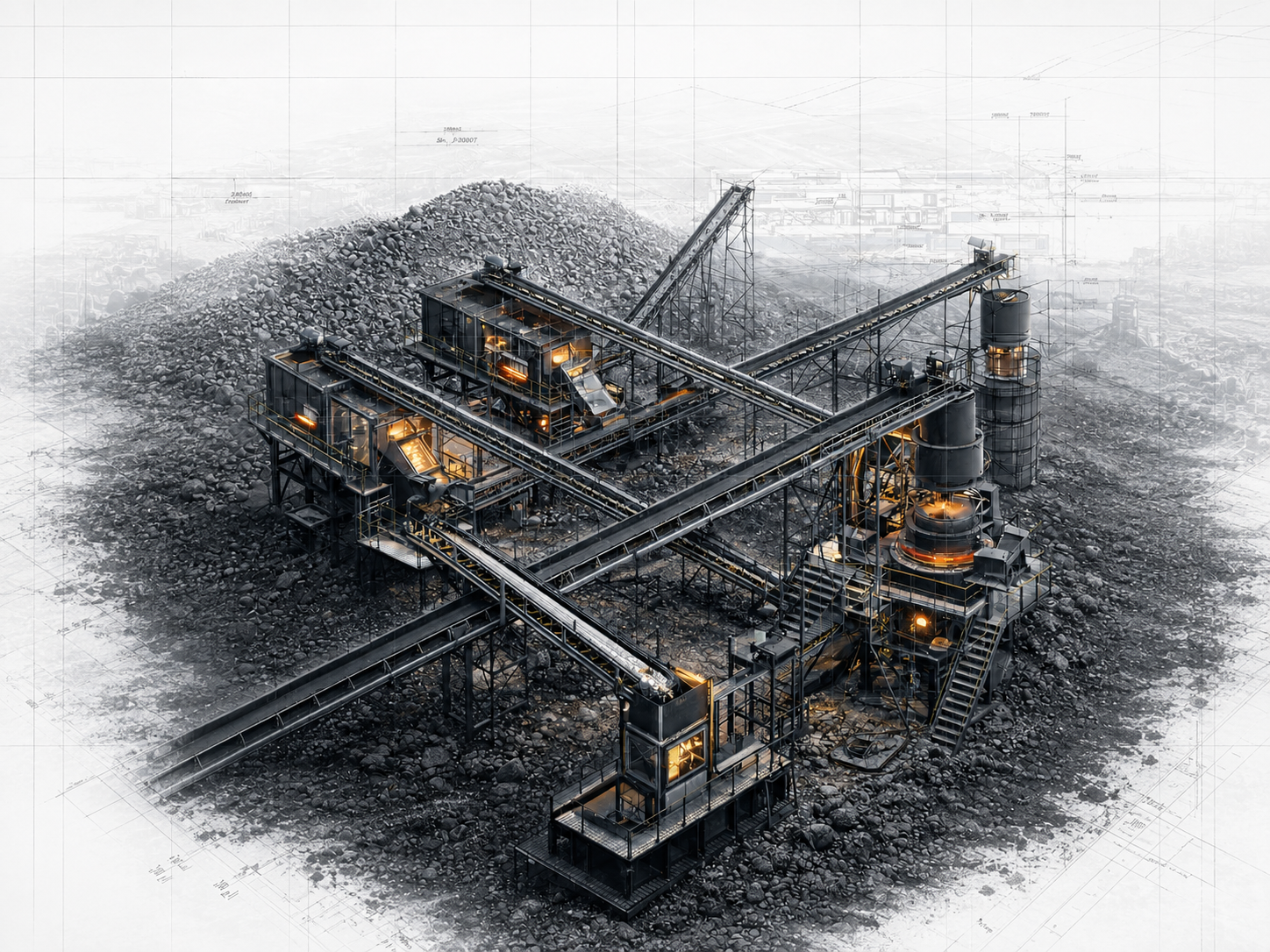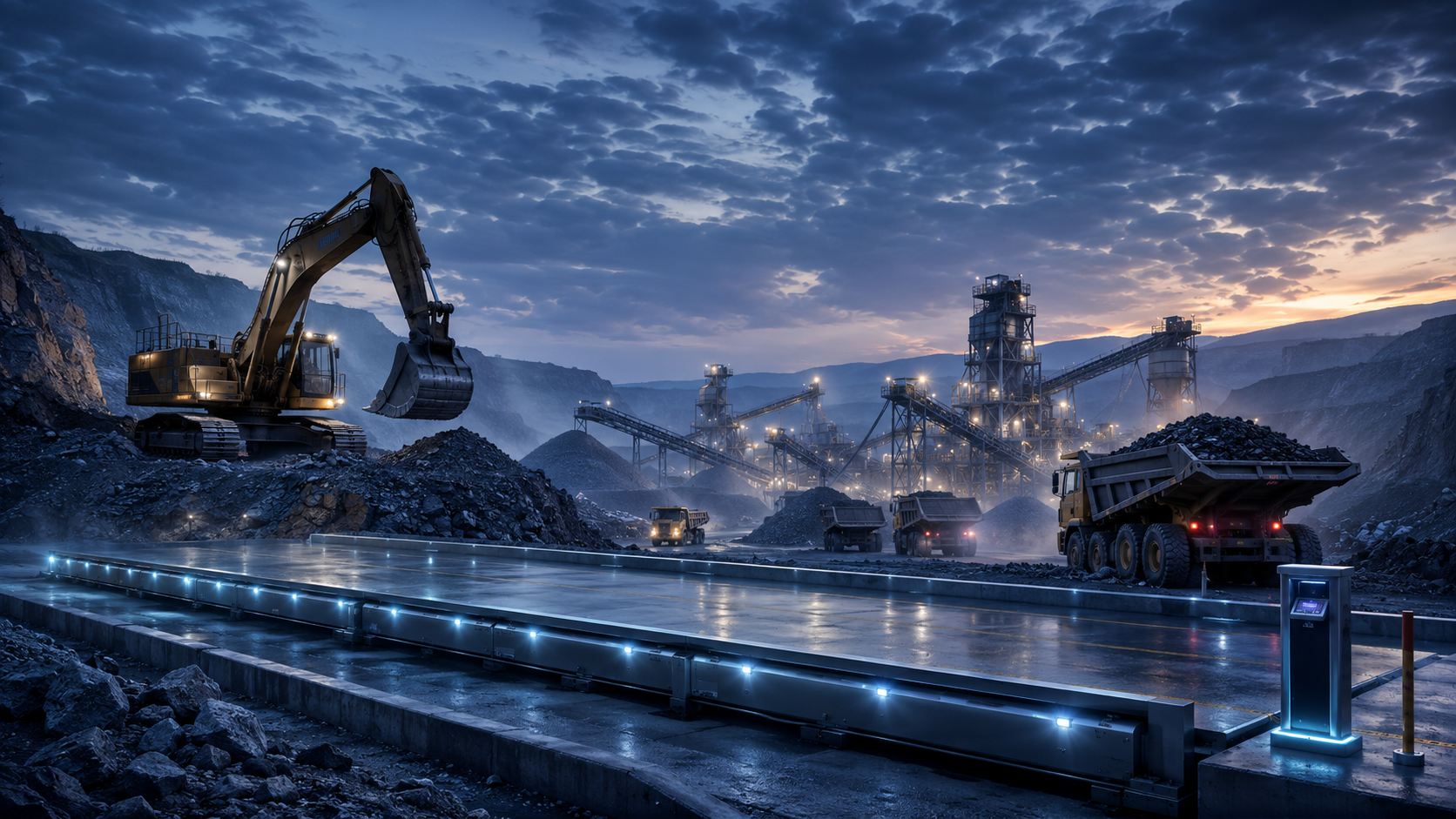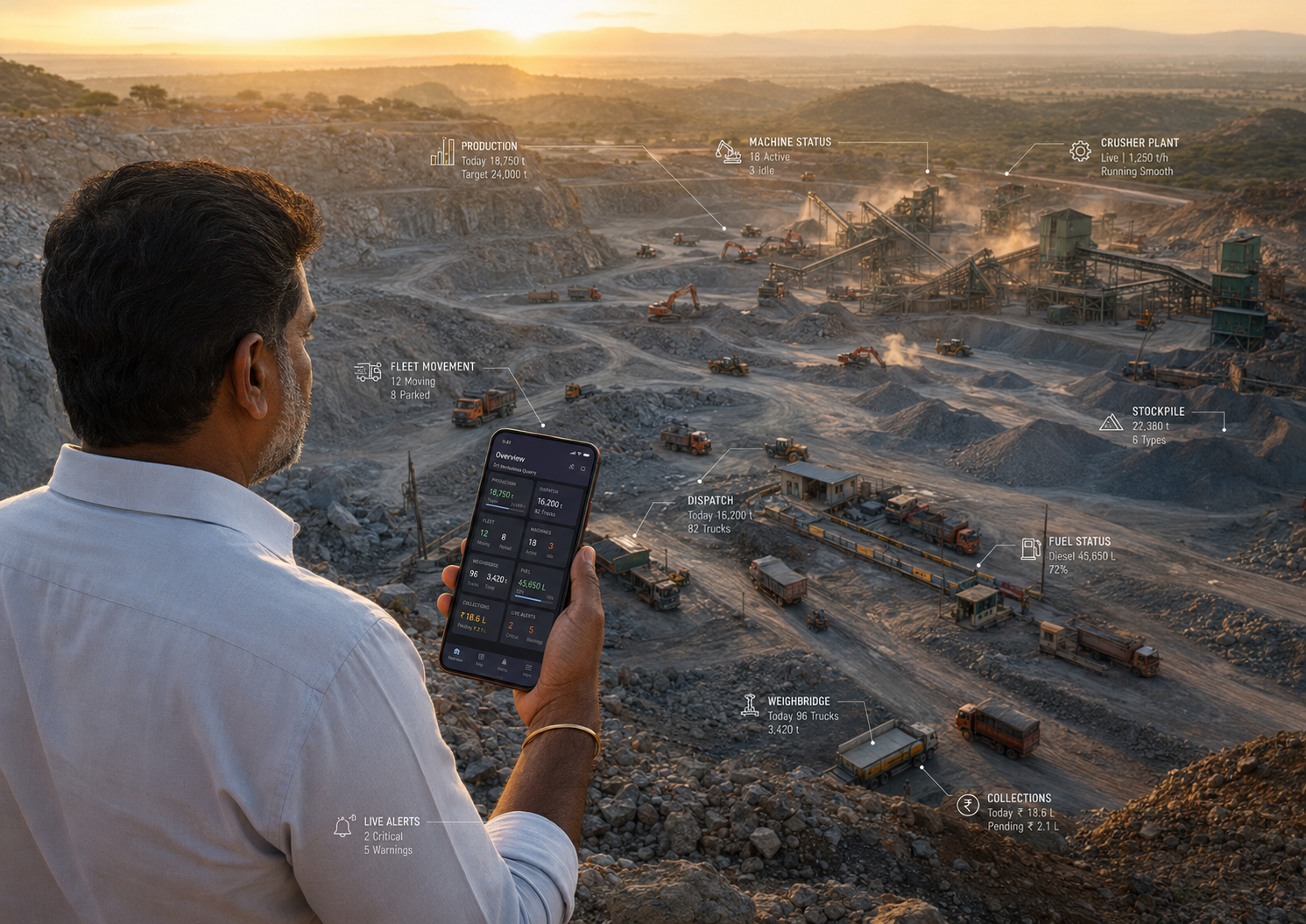
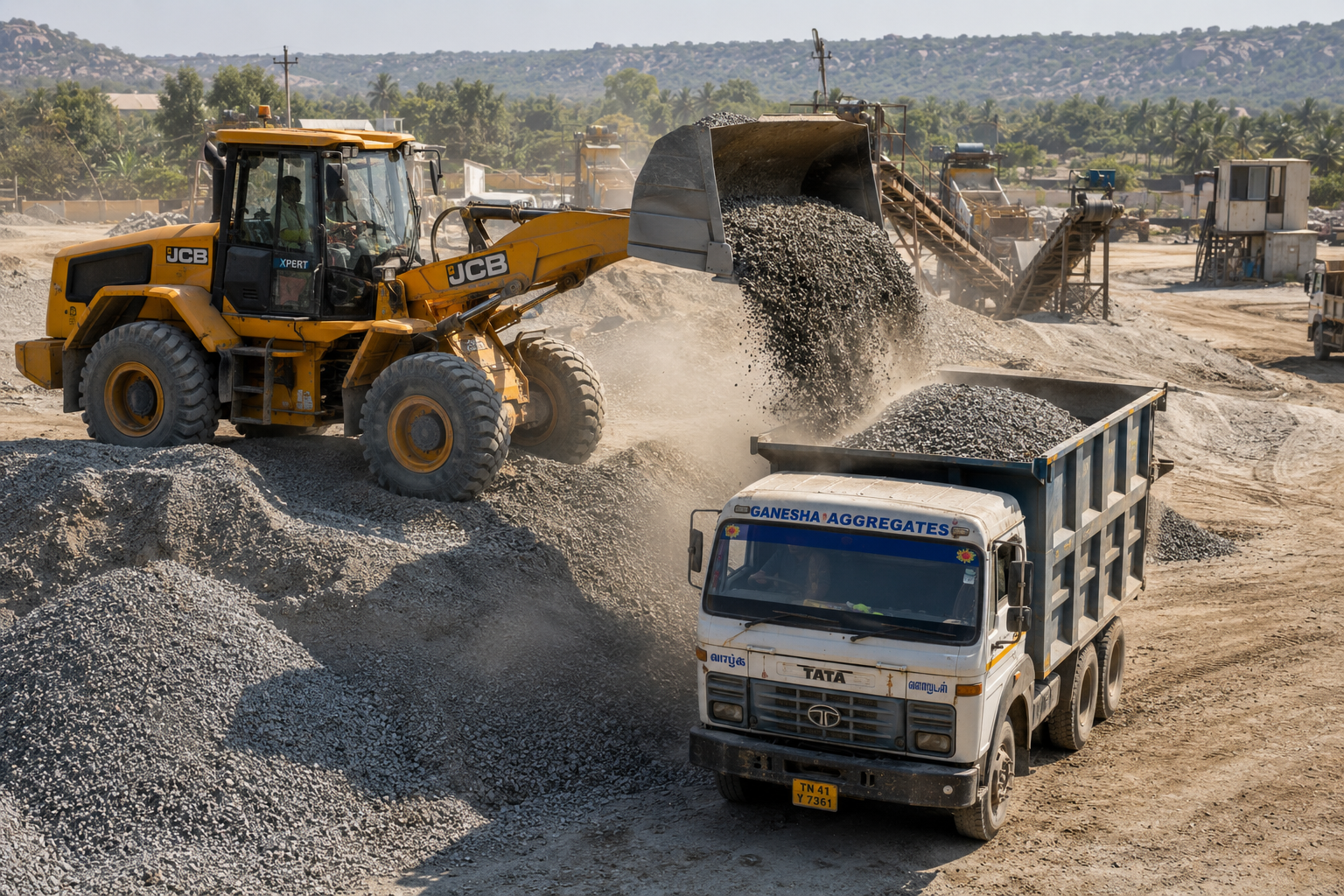
To the uninitiated eye, a stone quarry is an exercise in brute force. It is a place of visceral extremes: the earth-shattering boom of subterranean blasting, the relentless, grinding hum of heavy crushers, the towering plumes of grey dust, and the deep, rhythmic throbbing of massive diesel engines. It is a landscape that feels almost prehistoric, a testament to humanity’s ongoing attempt to carve civilization out of the raw, unyielding crust of the earth. But to look at a modern quarry and see only rocks, dust, and heavy machinery is to miss the true nature of the operation entirely.
Beneath the grit and the noise lies a hidden architecture of staggering complexity. Behind the mountains of 20 mm aggregate and the sprawling stockpiles of manufactured sand (M-Sand) exists a delicate, invisible, and meticulously calibrated ecosystem. Today, the extraction and delivery of raw materials are no longer defined simply by mechanical horsepower or the explosive yield of a quarry face. Instead, they are defined by the elegant and relentless flow of data. The modern quarry does not merely produce construction materials; it produces a ceaseless stream of digital intelligence, orchestrating a ballet of logistics that dictates the pace at which our cities grow.
This is the story of the journey before the physical journey—a deep dive into the interconnected web of decisions, validations, and technological milestones that transform a chaotic hole in the ground into the pulsing heart of modern infrastructure. It is a narrative of how brute force was tamed by digital precision, and how the simple act of moving a rock from one place to another has evolved into a masterclass in supply chain management.
The Genesis: The Journey Before the Journey
Long before the first jagged stone ever touches the heavy steel of a truck’s loading bed, its journey has already commenced in the quiet, climate-controlled confines of a dispatch office. This genesis is entirely invisible, written in lines of code and illuminated by the glow of computer monitors.
It begins with a catalyst as simple as a ringing phone, an automated email, or a digital ping in an enterprise resource planning (ERP) system. A customer has placed an order. Perhaps a major infrastructure conglomerate desperately requires twenty loads of 20 mm aggregate to pour the foundation of a critical commercial high-rise. Perhaps a highway contractor needs hundreds of tons of high-grade M-Sand to meet a strict paving deadline before the monsoon rains arrive. Or perhaps a local contractor is frantically requesting a rush delivery of crusher dust before noon to keep a localized paving crew from standing idle.
What appears to be a mundane, everyday transactional request quietly and instantly sets an elaborate chain of events into motion. In the modern aggregate business, an order is not merely a request for material; it is a complex algorithmic trigger. The moment the request enters the system, the business begins making dozens of critical, interconnected decisions within milliseconds.
First, the customer's identity and financial standing are scrutinized by automated systems. Payment histories are cross-referenced, and credit limits are rigidly checked to ensure the financial viability of the transaction. A quarry operates on razor-thin margins and massive volumes; a single delayed payment on a massive infrastructure order can disrupt the cash flow of the entire operation.
Simultaneously, inventory management systems query the physical reality of the stockyards. Is the specific grade of aggregate available in the requested volume? If the material is present, dispatch priorities must be established. Who is waiting? Whose contract carries punitive delay clauses? The dispatcher, acting as a high-stakes air traffic controller, must weigh these variables in real-time. If the material is running low, production schedules must be dynamically adjusted. The crushers must be recalibrated, loaders must be redirected to different faces of the quarry, and the maintenance team must be alerted to the shift in operational tempo. Loading instructions, complete with specific geofenced stockpile locations and safety protocols, are prepared and queued.
At this precise moment, the truck assigned to this order has not yet even arrived at the quarry gates. The engine may not even be running. Yet, the business has already executed a flawless sequence of risk assessment, inventory allocation, production forecasting, and logistical planning. The journey has begun, not with the turn of a wheel, but with the click of a mouse.
“What appears to be a mundane, everyday transactional request quietly and instantly sets an elaborate chain of events into motion. An order is not merely a request for material; it is a complex algorithmic trigger.”
— Super Administrator
The Symphony of Arrival: Where Time is the Ultimate Currency
Eventually, the physical avatar of this digital preparation arrives. The heavy-duty dump truck, a scarred and dusty veteran of the road, pulls off the highway and approaches the quarry boundaries. The driver behind the wheel may have visited this exact facility hundreds of times before. The route is memorized, the bumps in the approach road are anticipated, and the faces of the security personnel are familiar. Yet, in the eyes of the operational software overseeing the quarry, every single visit is uniquely timed, uniquely coded, and utterly critical.
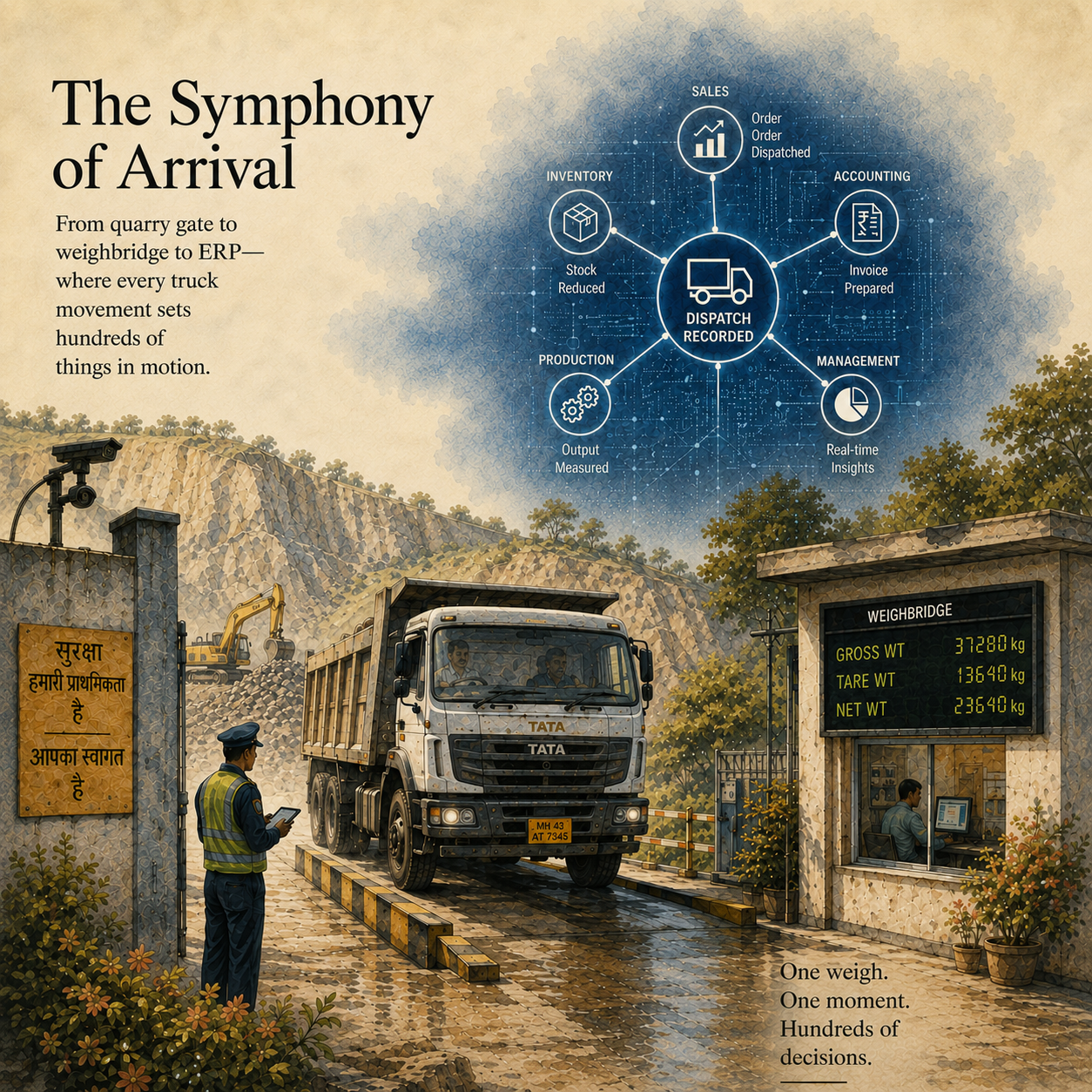
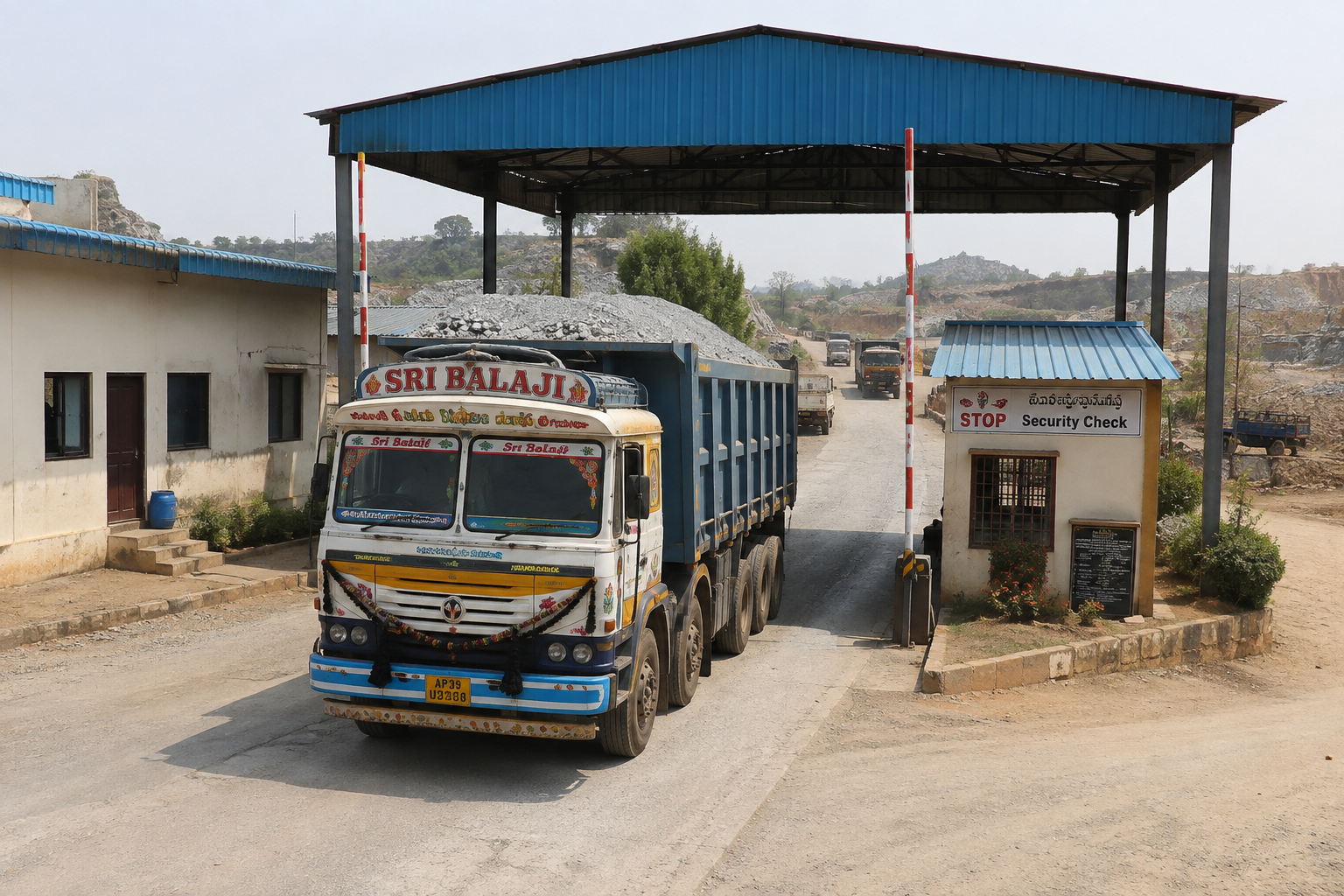
As the truck rolls up to the security gate, the symphony of arrival begins its first movement. The gates open not just to a vehicle, but to a designated carrier of a specific contractual obligation. Vehicle details—license plates, RFID tags, and tare weights—are instantly confirmed by automated scanners and relayed to the central server. The overarching order is identified and married to this specific truck. The destination is locked in, and the countdown clock begins ticking.
In the aggregate industry, time is not merely money; time is survival. The customer at the far end of the journey has rigid expectations. Concrete mixers are turning, rebar is laid, and highly paid construction crews are waiting. Any delay at the quarry cascades exponentially down the supply chain. On the other side of the equation, the quarry’s production team has output commitments to meet.
Here, at the convergence of supply and demand, time matters above all else. Every minute a truck spends waiting in a queue represents an intolerable inefficiency. It represents millions of dollars of heavy machinery standing idle on a construction site miles away. It represents dispatch schedules quietly slipping behind, inevitably pushing late-afternoon deliveries into costly overtime or perilous nighttime driving conditions.
True operational excellence in a quarry is rarely measured by how quickly an individual truck can move across the rutted dirt roads of the facility. Speed is dangerous and heavily regulated. Instead, excellence is measured by a far more sophisticated metric: fluidity. It is measured by how effortlessly the entire systemic apparatus of the quarry moves with the trucks. It is the absence of bottlenecks, the elimination of dead time, and the smooth, frictionless transition from arrival to loading to departure. When a quarry is operating at peak efficiency, it does not look rushed; it looks calm. It operates with a relentless, predictable cadence, a logistical heartbeat that keeps the blood of the construction industry pumping.
The Alchemy of the Weighbridge: Where the Physical Becomes Digital
As the newly arrived truck bypasses the security checkpoint and slowly rumbles onto the heavy steel plates of the weighbridge, most casual observers see nothing more than a routine, mundane stop. It is a scale. A truck drives onto it, a number is recorded, and the truck drives off.
But to experienced logistics operators, quarry managers, and data analysts, the weighbridge represents something far more profound. It is the crucible of the entire operation. It is the exact, magical moment where the chaotic, dusty, physical world is instantaneously transmuted into pure, clean, digital reality. It is a modern-day Rubicon; once crossed, the nature of the material fundamentally changes.
When millions of pounds of steel and stone settle onto the load cells of the weighbridge, a physical vehicle officially becomes a measurable business transaction. A geographical destination becomes an actionable dispatch protocol. A theoretical customer order becomes a tangible, trackable reality.
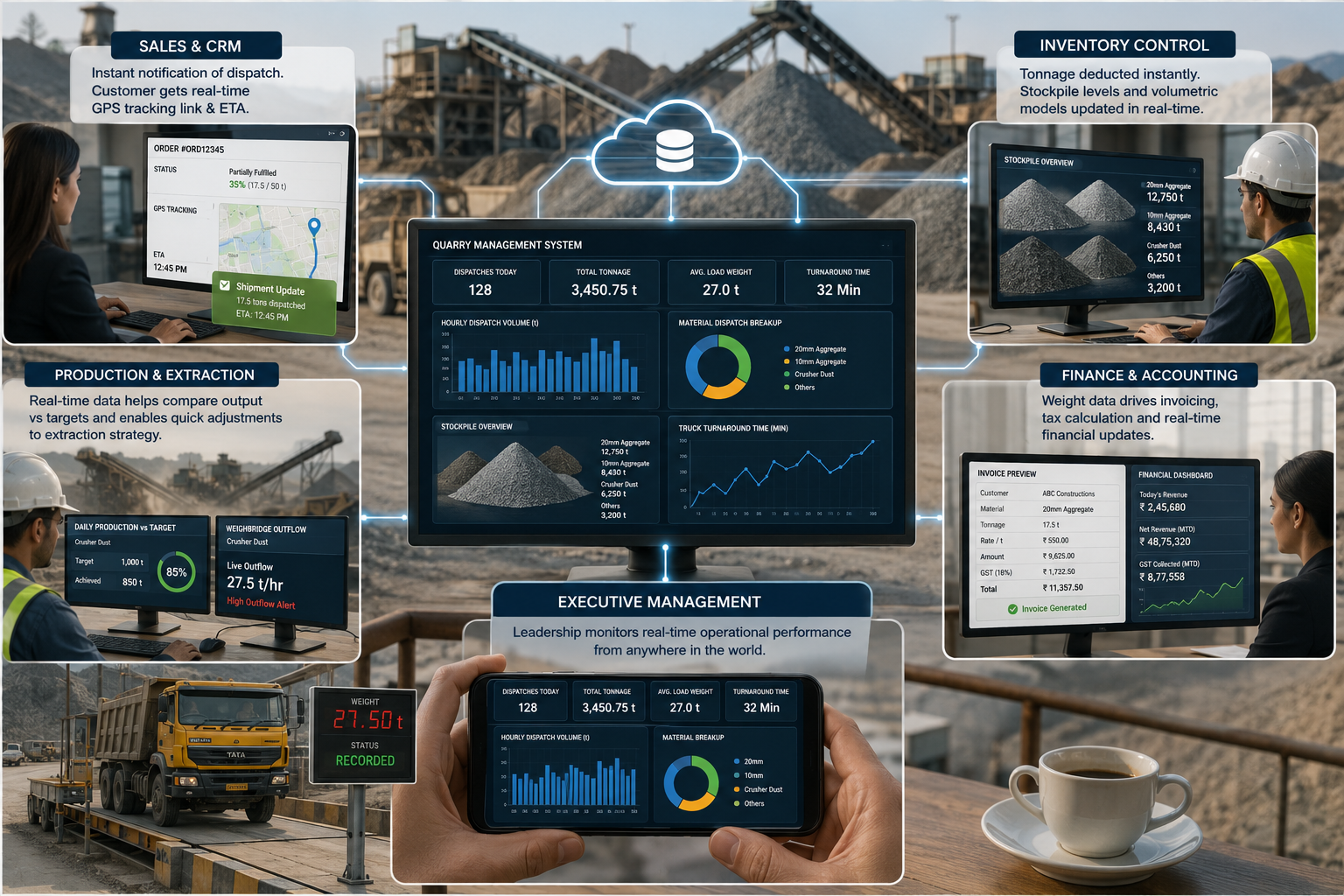
Every single recorded weight—down to the exact kilogram—triggers a massive, instantaneous chain reaction that ripples through the nervous system of the entire organization. The weighbridge acts as the central node, firing off synapses to every department simultaneously:
- Sales and CRM: The sales department receives an immediate notification. They know exactly what fraction of the customer's total order has just been fulfilled. The customer portal updates automatically, providing the buyer with a real-time GPS tracking link and an ETA for their desperately needed aggregate.
- Inventory Control: The inventory management system instantly deducts the recorded tonnage from the specific stockpile. The system "understands" what has left the stockyard, updating the overarching volumetric models of the quarry's remaining resources.
- Production and Extraction: The production team uses this real-time data to measure today's output against their daily targets. If the weighbridge indicates that crusher dust is moving out faster than the secondary crushers are producing it, the quarry manager can make an immediate, mid-shift adjustment to the extraction strategy.
- Finance and Accounting: The accounting software absorbs the weight data, marries it to the customer’s pre-negotiated pricing matrix, and automatically prepares future invoices. The revenue is recognized, the taxation (such as GST) is calculated, and the financial health of the company is updated on the executive dashboards.
- Executive Management: At the highest levels of the company, leadership gains unfiltered, real-time insight into the operational performance of the asset. They can monitor truck turnaround times, average load weights, and hourly dispatch volumes from a smartphone thousands of miles away.
One single, seemingly simple event—a truck pausing on a metal plate for fifteen seconds—drives dozens of macro-decisions and hundreds of micro-consequences. The weighbridge is the absolute truth of the quarry. In an industry built on moving massive volumes of low-margin earth, accuracy at the weighbridge is the thin line separating a highly profitable enterprise from a catastrophic financial failure. It is where accountability is forged.
The Loading Area Orchestra: The Hidden Interdependencies of the Pit
Moving away from the quiet hum of the weighbridge and down into the dusty, cavernous bowl of the loading area reveals an entirely new chapter of the story. This is the belly of the beast, where the physical labor of extraction meets the logistical demand of the market.
Here, massive wheel loaders—marvels of modern hydraulic engineering, towering stories into the air and capable of scooping tons of rock in a single motion—move continuously between carefully organized, mountainous stockpiles. These immense machines are operated by men and women possessing a practiced, almost artistic precision, a muscle memory developed over thousands of similar, repetitive movements. They do not merely dump rock into a truck; they balance the load perfectly over the axles to ensure highway safety, they blend materials if a specific aggregate mix is required, and they do it all while navigating a chaotic landscape of reversing dump trucks, changing weather conditions, and shifting terrain.
Every single bucket of aggregate that drops into the bed of a waiting truck represents the culmination of production work completed hours, days, or even weeks earlier. The rock falling into the truck is the final note in a very long symphony.
It is crucial to understand that absolutely nothing inside a quarry exists in isolation. The loading process, as spectacular as it is, is entirely dependent upon the prior success of the production team. The crushers, screens, and conveyors must have processed the raw stone to the exact geometric specifications required by the civil engineers.
In turn, that production relies entirely upon the unsung heroes of the maintenance department. Heavy equipment operating in a highly abrasive, dust-filled environment tears itself apart by design. The crushers chew through steel liners; the conveyor belts stretch and fray; the loaders require constant hydraulic attention. Without a predictive, rigorous maintenance schedule, the entire operation grinds to a catastrophic halt.
Maintenance, in its turn, hinges upon forward-thinking operational planning. When do we take the primary crusher offline for repairs without starving the stockpiles? When do we schedule the next explosive blast at the quarry face to ensure a steady supply of raw feed?
And finally, all of this planning, drilling, blasting, crushing, maintaining, and loading is driven entirely and exclusively by one thing: customer demand. Every single department quietly and inherently supports the next. Viewed individually, out of context, these activities might appear ordinary, perhaps even mundane. A mechanic turning a wrench. A loader reversing. A driller boring a hole. But viewed together, from an operational altitude, they resemble a world-class orchestra. Every section—strings, brass, percussion—must play their individual parts flawlessly, entering at the exact right moment, to ensure the performance is a success. If the maintenance department falls out of tune, the loading department cannot play. The coordination required to maintain this harmony is nothing short of remarkable.
“Nothing inside a quarry exists in isolation. Loading depends upon production; production relies on maintenance; maintenance hinges on planning; and planning is driven entirely by customer demand. It is a world-class orchestra of heavy industry.”
— Super Administrator
The Immortal Journey of Information: Beyond the Quarry Gates
Eventually, the loading is complete. The truck is weighed one final time to determine the net weight of the payload, the tarp is rolled over the top of the aggregate to prevent spillage, and the driver begins the journey toward the exit.
For the driver holding the steering wheel, the destination may simply be another highway construction site or a commercial foundation twenty miles away. Once the rock is dumped, the driver's immediate responsibility ends, and they turn around to do it all over again. For the physical stone, its journey will soon end in a bed of cement, destined to remain motionless for a century or more.
For the quarry, however, the journey of that specific load has only just begun. The physical rock may have left the property, but its digital ghost remains behind, working tirelessly on behalf of the enterprise.
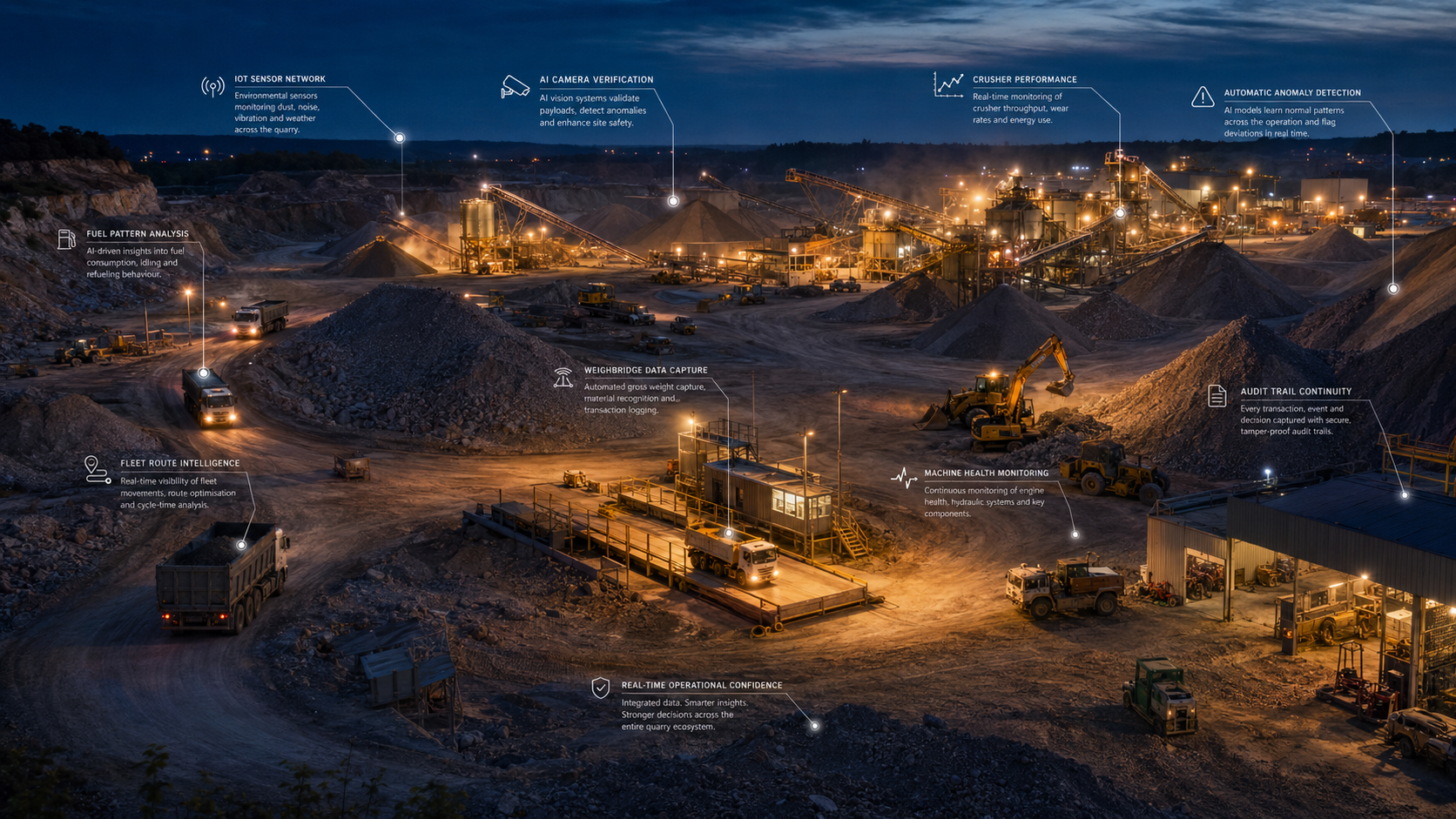
The dispatched load continues traveling through the digital ecosystem long after the vehicle’s taillights disappear beyond the security gate and merge into the highway traffic. The moment the exit boom-gate lifts, automated invoicing systems are triggered. Complex GST documentation and e-way bills are generated instantly, ensuring absolute compliance with regional and national tax regulations. Customer financial balances are updated in the cloud, and outstanding payments instantly become visible on the accounts receivable dashboards.
But the data's utility extends far beyond simple accounting. Sales and marketing teams begin to aggregate and analyze the purchasing patterns derived from thousands of these individual loads. They look for macro-trends. Are orders for M-Sand increasing in the northern suburbs? Is the demand for 40 mm aggregate slowing down, indicating a potential cooling of commercial real estate development? This data allows the quarry to pivot its production strategies weeks in advance of market shifts.
Simultaneously, operational management reviews dispatch efficiency metrics. They analyze the time stamps to identify micro-inefficiencies. Did truck number 42 spend three minutes longer at the loader than the daily average? Why? Was the stockpile located too far away, or was the loader operator experiencing mechanical issues?
Every single journey undertaken by a truck contributes another vital page to the historical record of the business. The stone leaves the quarry only once, and it never returns. But the information generated by that stone continues working forever. It becomes the foundational data upon which next year's budgets are built, next decade's expansion plans are drafted, and the very future of the company is secured.
Delivering Trust: The True Currency of Heavy Industry
When we pull back and view the entire, magnificent process from end to end—the digital genesis in the dispatch office, the synchronized arrival, the alchemy of the weighbridge, the physical ballet of the loading pit, and the immortal legacy of the data—it profoundly changes how we must view this industry.
Perhaps this explains why the most successful, visionary industrial businesses think fundamentally differently about transportation and logistics. When these modern operators look out over their facilities, they do not merely see heavy-duty trucks moving dirt from point A to point B. They see something infinitely more valuable.
They see commitments.
They see solemn promises made to customers—promises that a foundation will be poured on time, that a bridge will be completed before the winter frost, that a hospital will open its doors on schedule. They see the sweat and capital of production physically transformed into sustainable revenue. They see long-term, multi-generational business relationships strengthened through the invisible power of relentless consistency.
Every single truck that leaves a quarry on time, properly loaded, and fully documented quietly reinforces confidence in the market. Every accurately generated invoice, devoid of errors and delivered instantly, builds corporate credibility. Every completed payment closes a massive, complex operational loop that began days, or perhaps weeks, earlier with a single, simple conversation between a sales representative and a customer.
Ultimately, the journey we have traced is never simply about transportation alone. Transportation is just the physical manifestation of the service. The true journey is about trust arriving exactly where it was promised, exactly when it was expected.
Consider the sheer scale of this reality. A medium-sized quarry operation may dispatch many hundreds of heavy vehicles every single day. The volume of material moved is staggering. Yet, the volume of data moved is infinitely larger. Each one of those hundreds of vehicles generates dozens of highly interconnected operational events—ranging from initial customer orders and precise weighment records to dynamic inventory movements, automated invoicing, strict GST and regulatory compliance, collections tracking, deep production analytics, and high-level executive management reporting.
To call these enterprises "mining companies" or "transport operators" is to do them a severe disservice. It relies on an outdated, analog understanding of a thoroughly digitized world.
The reality is that modern, successful quarry businesses no longer merely manage trucks, loaders, and crushers. The physical assets are just the tools. What they truly manage, with breathtaking precision and scale, is the immense, non-stop flow of information that those physical assets create. They are technology companies that happen to deal in stone. They are the digital architects of the physical world. And every time a truck rolls off the weighbridge, another data point is created, another promise is kept, and another piece of the future is built.