Summary: Tamil Nadu postponed GPS enforcement to 31 October after only 21% adoption, while Rajasthan exposed practical fraud patterns that basic weighbridge digitisation does not prevent. India also moved closer to a regulated mineral exchange, creating a future integration opportunity for limestone sales and delivery reconciliation.
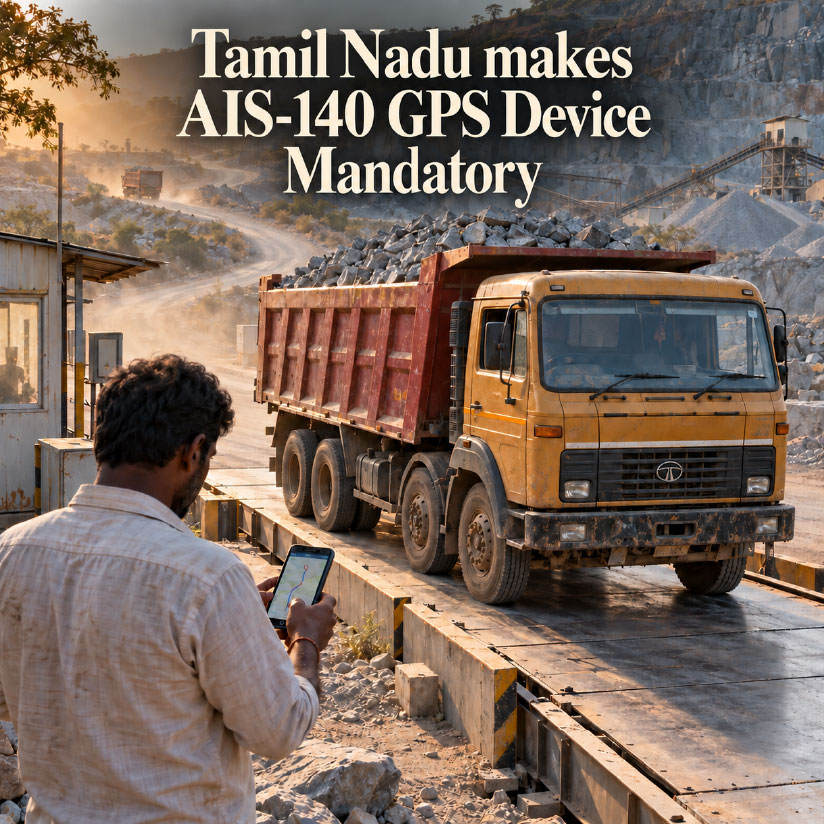
1. Tamil Nadu GPS enforcement was postponed
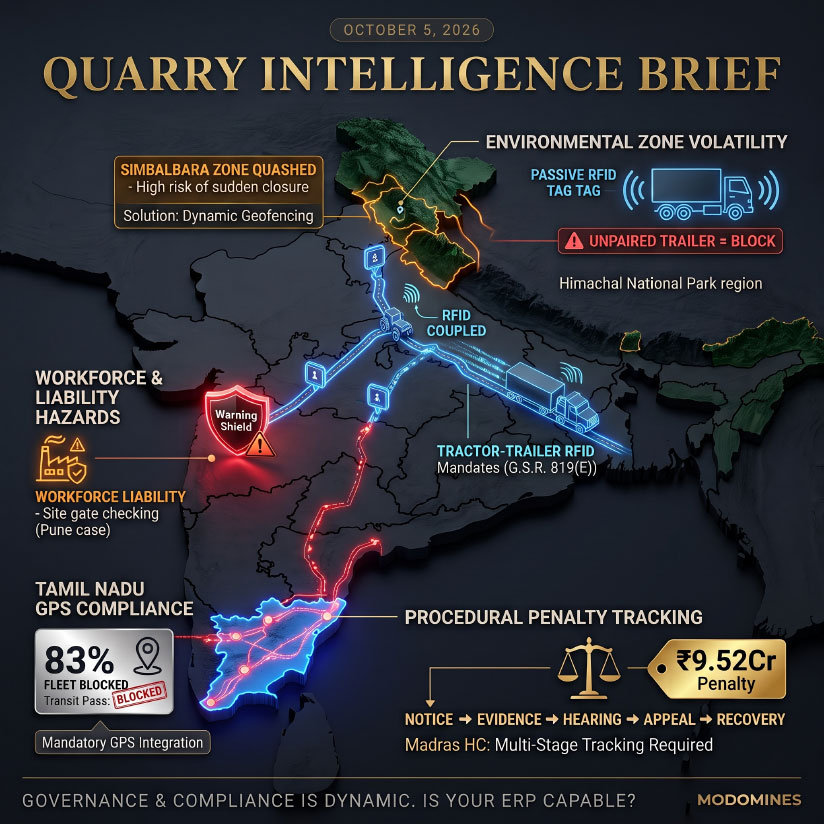
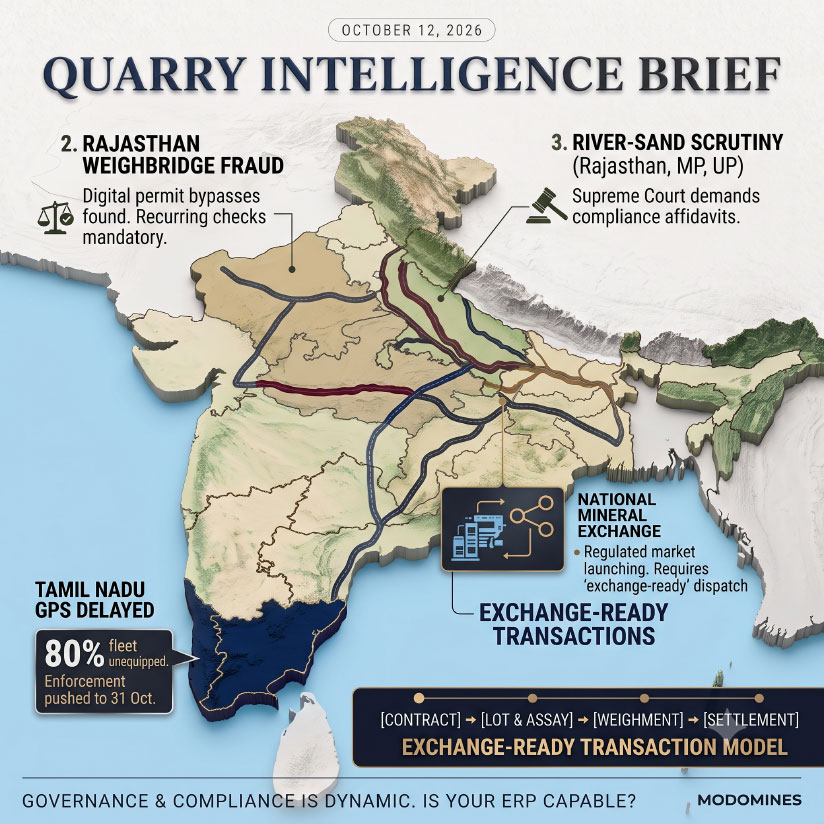
Tamil Nadu reportedly extended the MiMaS-linked GPS deadline from 30 September to 31 October. Only 30,000 of 1.4 lakh registered mineral trucks, only 21% were equipped. Officials cited limited device availability despite 37 authorised vendors. A transport association also reported AIS-140 device prices falling from ₹15,000 to ₹3,700.
2. Rajasthan’s digital weighbridge system is revealing exploitable gaps
On 6 October, Rajasthan ordered recurring weighbridge and vehicle inspections after complaints involving loads exceeding e-Ravanna quantities and one parked vehicle allegedly being used to generate multiple passes by changing its number plate. Inspection reports are now due every Monday.
Digital permits and ANPR alone do not prove that the declared vehicle, physical truck and weighed load are the same transaction. Customers should be made aware to prioritise duplicate-pass detection, plate-change alerts, vehicle-feature matching, weighbridge occupancy evidence, impossible-time checks and reconciliation of permitted versus measured quantity.
3. India has begun selecting an operator for its mineral exchange
IBM published applications on 3 October—notice dated 1 October—for a regulated, electronic mineral exchange. Initial commodities may include limestone, iron, chromite, bauxite and manganese; applications close 2 November. The exchange must support delivery-based contracts, price discovery and timely supply.
Aggregates are not initially included, but limestone producers could become early users. Exchange-based trading would increase demand for trusted quality, dispatch, weighment and delivery records.
Modomines defines an “exchange-ready transaction” model covering contract, assay, lot, source, weighment, logistics, acceptance and settlement, then validate it with limestone customers.
4. River-sand traceability faces greater judicial scrutiny in Rajasthan, MP and UP
On 6 October, the Supreme Court directed the Central Empowered Committee to report on riverbed sand mining and ordered Rajasthan, Madhya Pradesh and Uttar Pradesh to submit compliance affidavits. The next hearing is scheduled for 4 November.
Though this is not a new nationwide rule, but it increases the likelihood of tighter source, routes and vehicle evidence requirements. Modomines ensures that every dispatch can be traced to an authorized source, effective and valid permits, geofenced loading location, tightly measured quantity and uninterrupted vehicle journey data.